

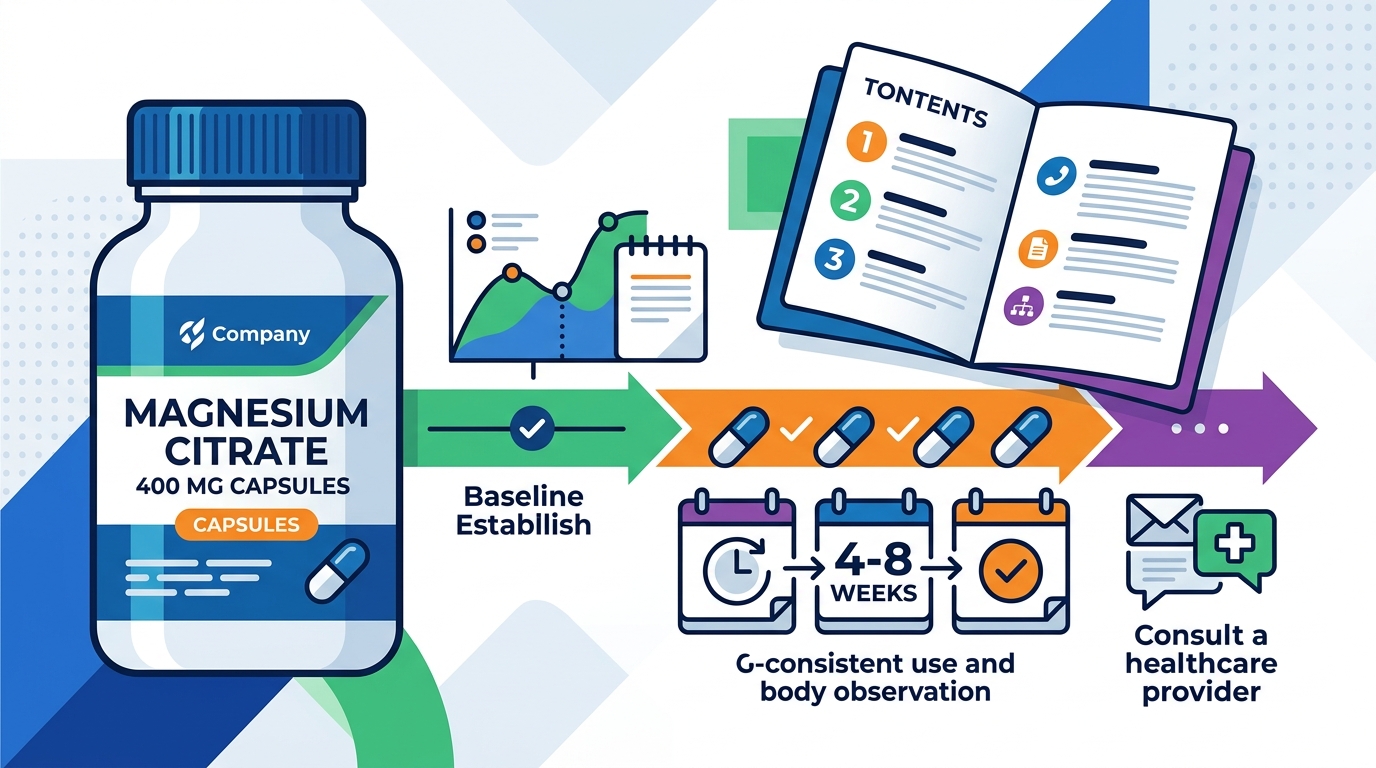
For most adults, you do not need to test magnesium citrate 400 mg capsules daily. Instead, you should monitor your body's response to the supplement over a 4 to 8 week period. This guide covers how to establish a baseline, understand dosage safety, and know when to consult a healthcare provider.
Understanding Magnesium Citrate
Magnesium citrate is a chelated form of magnesium bound to citric acid. This specific chemical structure is known for high bioavailability, meaning the body can absorb it more efficiently than other forms like magnesium oxide. The citrate component also acts as a mild osmotic agent, which can help with hydration and bowel regularity.
When evaluating a supplement for daily wellness, the form matters as much as the dose. A 400 mg capsule typically refers to the total weight of the magnesium citrate compound, not the elemental magnesium. For example, a 400 mg capsule of magnesium citrate contains approximately 50 to 60 mg of elemental magnesium. This distinction is critical for accurate dosing and testing.
Phi Naturals formulates its Magnesium Citrate 400mg Supplement to provide a consistent source of this mineral. The product is designed to be gluten-free and non-GMO, ensuring purity for long-term daily use. Understanding the difference between compound weight and elemental weight is the first step in creating a safe testing protocol.
Dosage Protocols and Frequency
Standard dosing for magnesium citrate usually ranges from 200 to 400 mg of elemental magnesium per day. However, the frequency of intake can vary based on individual tolerance. Some users prefer taking the full dose at once, while others split it into two smaller doses to minimize gastrointestinal discomfort.
Establishing a Baseline
Before starting a new supplement regimen, it is helpful to establish a baseline of your current health status. This includes noting your sleep quality, energy levels, and any muscle cramps. By documenting these factors for one week, you create a control point against which to measure the effects of the supplement.
Daily Consistency
Consistency is more important than intensity when testing a mineral supplement. Magnesium is a cofactor in over 300 enzymatic reactions, so its effects are cumulative. Taking the supplement at the same time each day helps maintain stable blood levels. For most people, taking it in the evening may support relaxation and sleep, as magnesium plays a role in regulating neurotransmitters.
Adjusting Frequency
If you experience loose stools or digestive upset, you may need to adjust the frequency. Splitting the dose into morning and evening can reduce the osmotic effect on the gut. If symptoms persist, reducing the dose or pausing the supplement temporarily is a safer approach than continuing at a high frequency.
Upper Intake Limits and Safety
The tolerable upper intake level (UL) for supplemental magnesium is generally set at 350 mg of elemental magnesium per day for adults. This limit applies to magnesium taken from supplements, not from food. Exceeding this limit can lead to adverse effects, primarily gastrointestinal issues.
It is important to calculate your total intake from all sources. If you are taking a 400 mg magnesium citrate capsule, you must verify the elemental magnesium content on the label. If the capsule provides 50 mg of elemental magnesium, you are well within the safe limit. However, if you are also taking other magnesium-containing supplements or multivitamins, you must add those amounts together.
Exceeding the upper intake limit can cause diarrhea, nausea, and abdominal cramping. In rare cases, excessive magnesium intake can lead to hypermagnesemia, a condition where magnesium levels in the blood become too high. This is more common in individuals with kidney impairment, as the kidneys are responsible for excreting excess magnesium.
Monitoring Biomarkers and Symptoms
Testing for magnesium levels is not always necessary for every user, but it can be helpful for those with specific health concerns. Serum magnesium tests measure the amount of magnesium in the blood, but this may not accurately reflect total body magnesium stores. Red blood cell magnesium tests are often considered more accurate for assessing long-term status.
For most healthy adults, monitoring symptoms is a practical approach. Look for improvements in sleep quality, reduced muscle cramps, and increased energy levels. If you do not notice any changes after 4 to 8 weeks, it may be worth consulting a healthcare provider to determine if a blood test is appropriate.
Keep a simple log of your daily intake and any physical symptoms. This data can be valuable when discussing your health with a professional. It provides a clear picture of how your body is responding to the supplement over time.
Consulting Healthcare Providers
Before starting any new supplement regimen, it is wise to consult with a healthcare provider. This is especially important if you have kidney disease, heart conditions, or are taking medications that interact with magnesium. Your provider can help determine the appropriate dose and frequency for your specific needs.
During your consultation, bring a list of all supplements and medications you are currently taking. This helps your provider identify potential interactions. For example, magnesium can interfere with the absorption of certain antibiotics and thyroid medications. Timing your doses appropriately can prevent these interactions.
If you are considering a blood test, ask your provider which type of test is most appropriate for your situation. They can interpret the results in the context of your overall health and help you make informed decisions about your supplement routine.
Supplement Comparison Table
| Supplement Type | Elemental Magnesium Content | Bioavailability | Best For |
|---|---|---|---|
| Magnesium Citrate | ~50-60 mg per 400 mg capsule | High | Daily wellness, sleep, and digestion |
| Magnesium Glycinate | ~100-150 mg per 400 mg capsule | Very High | Anxiety, sleep, and sensitive stomachs |
| Magnesium Oxide | ~40-50 mg per 400 mg capsule | Low | Constipation relief |
| Magnesium Malate | ~50-70 mg per 400 mg capsule | High | Energy and muscle pain |
Key Takeaways
- You do not need to test magnesium citrate daily; monitor your response over 4 to 8 weeks.
- Always check the label for elemental magnesium content, not just the compound weight.
- The tolerable upper intake level for supplemental magnesium is 350 mg per day for adults.
- Splitting your dose can help reduce gastrointestinal side effects.
- Consult a healthcare provider before starting any new supplement, especially if you have kidney issues.
- Keep a log of your symptoms and intake to track progress effectively.
- Choose a high-quality, non-GMO supplement from a trusted source like Phi Naturals Supplements.
Frequently Asked Questions
How often should I take magnesium citrate 400 mg?
Most adults take magnesium citrate once or twice daily. The specific frequency depends on your tolerance and the elemental magnesium content of the capsule. Start with one capsule per day and adjust as needed.
Do I need a blood test to check my magnesium levels?
For most healthy adults, monitoring symptoms is sufficient. However, if you have specific health concerns or are not seeing improvements, a blood test may be recommended by your healthcare provider.
What is the difference between magnesium citrate and magnesium glycinate?
Magnesium citrate is bound to citric acid and may have a mild laxative effect. Magnesium glycinate is bound to glycine and is often better tolerated by those with sensitive stomachs. Both forms have high bioavailability.
Can I take magnesium citrate with other supplements?
Yes, but be mindful of the total elemental magnesium intake. Avoid exceeding the upper intake limit of 350 mg per day from supplements. Also, check for interactions with medications like antibiotics or thyroid drugs.
How long does it take to see results from magnesium supplementation?
It typically takes 4 to 8 weeks to notice improvements in sleep, energy, and muscle cramps. Consistency is key, so take the supplement at the same time each day.
Is magnesium citrate safe for long-term use?
Yes, magnesium citrate is generally safe for long-term use when taken within recommended doses. However, individuals with kidney disease should consult a healthcare provider before starting supplementation.
Conclusion
Testing magnesium citrate 400 mg capsules for daily wellness is not about daily lab work. It is about consistent use, mindful monitoring, and professional guidance. By understanding the difference between compound weight and elemental magnesium, you can dose safely and effectively. Phi Naturals provides high-quality, non-GMO supplements that support your daily wellness goals. For more information on our products, visit our About Us page or for personalized advice.